


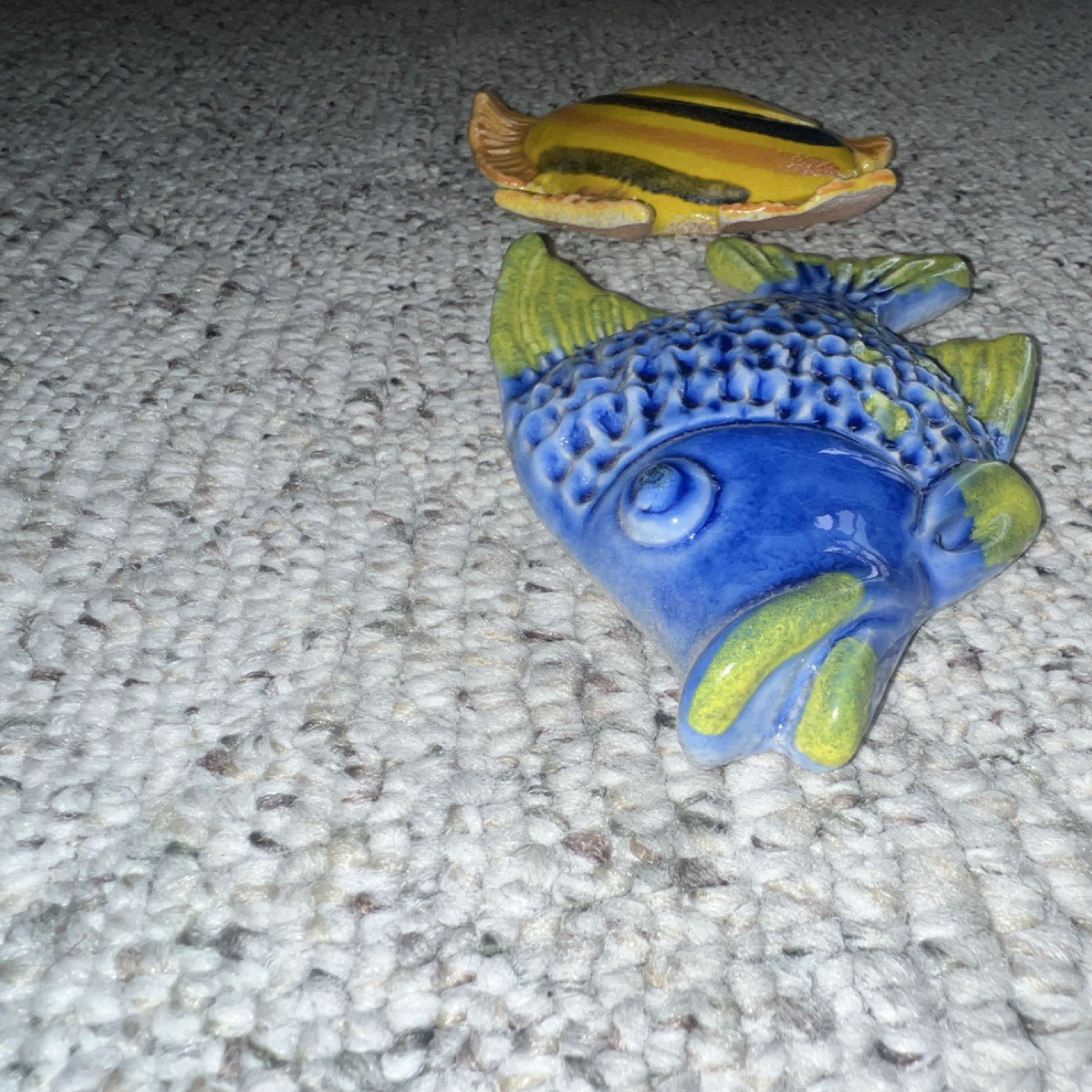


Vintage Hand Painted Italian Ceramic Fish Figurines Decorative Set of 2
$ 132.0
Description
Vintage Hand Painted Italian Ceramic Fish Figurines Decorative Set of 2. Set includes 2 distinct aquatic forms that demonstrate different glazing applications. The yellow fish features a smooth, high-gloss surface with hand-painted black and orange vertical bands. Each piece is constructed from red earthenware clay, a porous and iron-rich material sourced locally in Italy, and coated in a thick tin-oxide glaze. This set of vintage hand-painted Italian ceramic fish figurines are charming decorative pieces perfect for any room. The multicolor hand-painted finish adds a unique touch to the nautical-themed sculptures, making them a wonderful collectible for adults who appreciate handmade craftsmanship. These intricately detailed figurines will add a touch of whimsy and character to any space with their painted ceramic design. These vintage Italian Majolica ceramic fish wall hangings were produced using traditional terracotta pottery methods common in the Amalfi Coast and Bassano regions during the mid-to-late 20th century. Each piece is constructed from red earthenware clay and coated in a thick tin-glaze, a technical hallmark of Majolica that allows for high-pigment saturation and a glass-like finish. manufacturing process involves secondary firing to fuse decorative glazes to the body, ensuring colors remain stable and resistant to environmental fading. set includes 2 distinct aquatic forms that demonstrate different glazing applications. The yellow fish features a smooth, high-gloss surface with hand-painted black and orange vertical bands. In contrast, the cobalt blue fish is finished with a specialized raised "bubble" texture across the body and neon lime green accents on the fins, requiring a more complex application of slip or glaze to achieve the three-dimensional effect. Both pieces include serrated metal sawtooth hangers that were embedded directly into the moist clay before the initial firing to provide a permanent mounting point. Authentication is found on reverse unglazed surface of terracotta, where each item bears a stamped "Hand Painted Italy" mark. aesthetic integrity of the hand-painted designs is fully preserved. Maintaining these as a matching duo is significant for collectors, as it represents the original paired production run often broken up in the secondary market. These traditional terracotta pottery methods common in the Amalfi Coast & Bassano regions during the mid-to-late 20th century, specifically spanning late 1960s to early 1980s. Each piece is constructed from red earthenware clay, a porous and iron-rich material sourced locally in Italy, and coated in a thick tin-oxide glaze. This opaque white base is a technical hallmark of authentic Majolica (or Maiolica), serving as a blank canvas for the application of metal-oxide pigments. Unlike modern mass-produced ceramics that utilize printed decals, these pigments are hand-painted directly onto the raw, unfired glaze. This "in-glaze" technique allows the colors to sink into the base during a high-heat secondary firing, resulting in exceptional pigment saturation and a characteristic glass-like finish that is resistant to fading from UV exposure or environmental moisture. Set includes two distinct aquatic forms that demonstrate the versatility of Italian decorative glazing. The yellow fish features a smooth, high-gloss surface decorated with black and orange vertical bands, illustrating the traditional "flat" painting style. In contrast, the cobalt blue fish is finished with a specialized raised "bubble" texture across the body, accented by neon lime green fins. This three-dimensional effect is achieved through the application of a thicker slip or a reactive glaze that expands during firing, a more complex process often used by studios in the Sorrento peninsula to mimic the natural textures of sea life. Both pieces include factory-installed serrated metal sawtooth hangers embedded directly into the moist clay before the initial bisque firing, a sign of higher-quality vintage production compared to contemporary pieces. Authentication visible on reverse unglazed surface of the terracotta, where each item bears a hand-stamped "Hand Painted Italy" mark. These stamps were common requirements for export items entering US and UK markets following 1891 McKinley Tariff Act and subsequent trade regulations, confirming their provenance as authentic Italian handicrafts. front-facing glazed surfaces show no signs of heavy crazing—the fine web of cracks that often appears in older earthenware when the clay and glaze expand at different rates—indicating the pieces have been in stable, climate-controlled environments. structural and aesthetic integrity of the hand-painted designs is fully preserved. Maintaining these fish as a matching pair is increasingly significant for collectors of mid-century Italian pottery. During the peak of the 20th-century export boom, these were designed as curated sets for "gallery wall" displays in coastal-themed interiors. Because these sets were frequently separated over decades of resale, finding the smooth and textured variations together is becoming rare. As authentic 20th-century Majolica gains popularity among maximalist and retro-interior enthusiasts, this pair stands as a well-preserved example of regional Italian artisan history and a high-quality decorative accent.


