
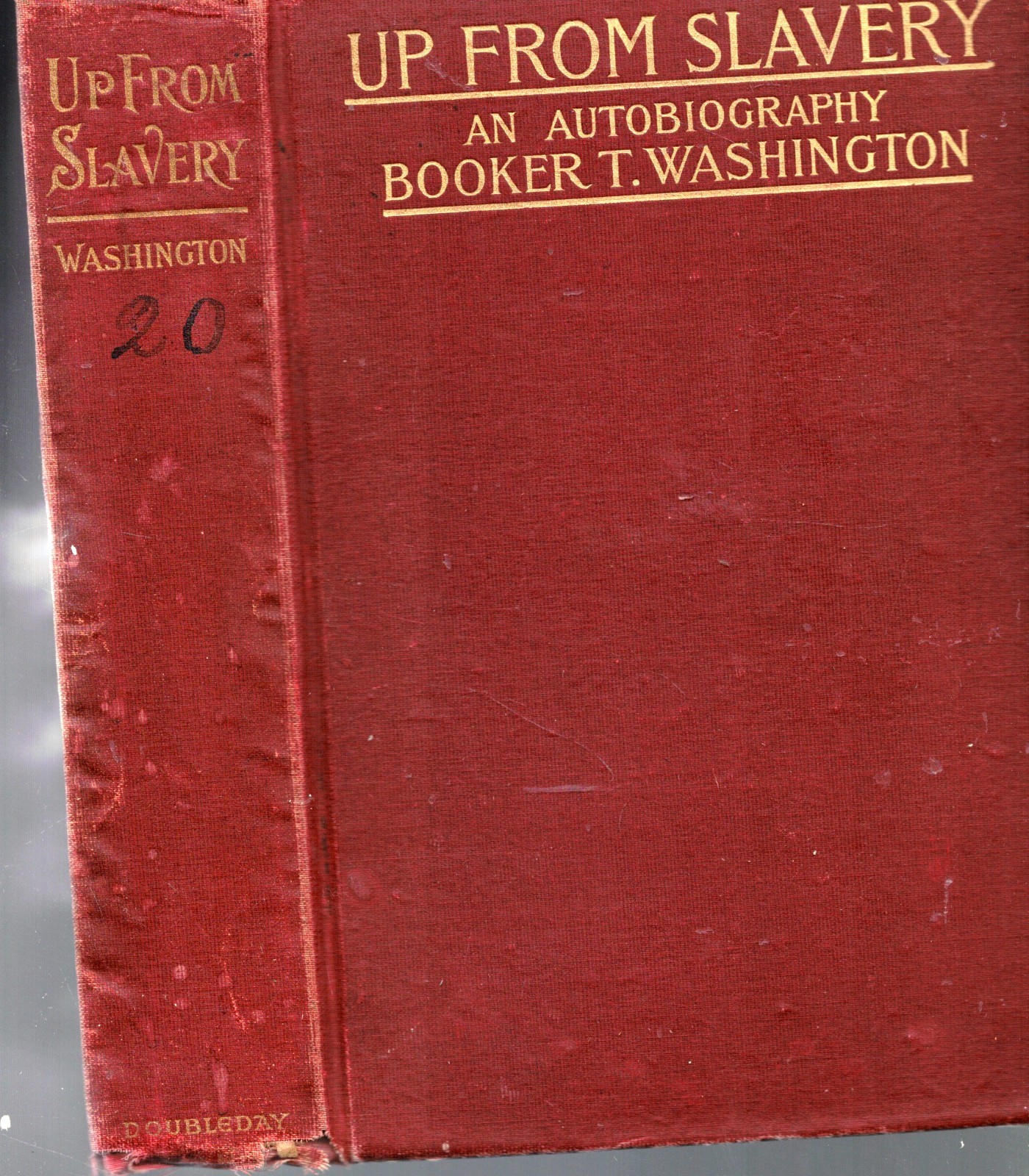

Rare 1901 First Edition Up From Slavery Booker T. Washington Illustrated
$ 10.56
Description
RARE 1901 FIRST EDITION UP FROM SLAVERY BOOKER T. WASHINGTON ILLUSTRATED. Bound in red cloth, gilt titles. The book describes his experience of working as an enslaved person during the Civil War. His book especially focuses on his work establishing vocational schools like the Tuskegee Institute in Alabama to help Black people and other underrepresented communities learn useful marketable skills. From 1901, the first edition of Up From Slavery, by Booker T. Washington, as published by Doubleday, New York. Sized 8x5 inches, 330 pages. Bound in red cloth, gilt titles. With a rubber stamp, Congregational Sunday School Library, Princeton, Maine. We have discounted this copy because it lacks a title page and the frontispiece print. Up from Slavery is an autobiography by an American educator Booker T. Washington (1856–1915), written in 1901 encompassing his life. The book describes his experience of working as an enslaved person during the Civil War. It also described the obstacles he overcame to obtain an education at the new Hampton Institute. His book especially focuses on his work establishing vocational schools like the Tuskegee Institute in Alabama to help Black people and other underrepresented communities learn useful marketable skills. Up from Slavery became a best-seller, and remained the most popular African-American autobiography until The Autobiography of Malcolm X in 1965. The Modern Library, an American publishing company, listed the book at No. 3 on its list of the 100 best nonfiction books of the 20th century, and in 1999 it was also listed by the conservative Intercollegiate Review as one of the "50 Best Books of the Twentieth Century".


